
Fundoplication surgery for acid reflux
Helping you take control of reflux, naturally and effectively
If you often have heartburn, food coming back up, or discomfort after eating, you may have gastro-oesophageal reflux disease (GERD). At Auckland Laparoscopic Surgery, we offer laparoscopic fundoplication surgery. This is a safe and effective long-term option for people whose reflux does not improve with lifestyle changes or medicines.
What is fundoplication surgery?
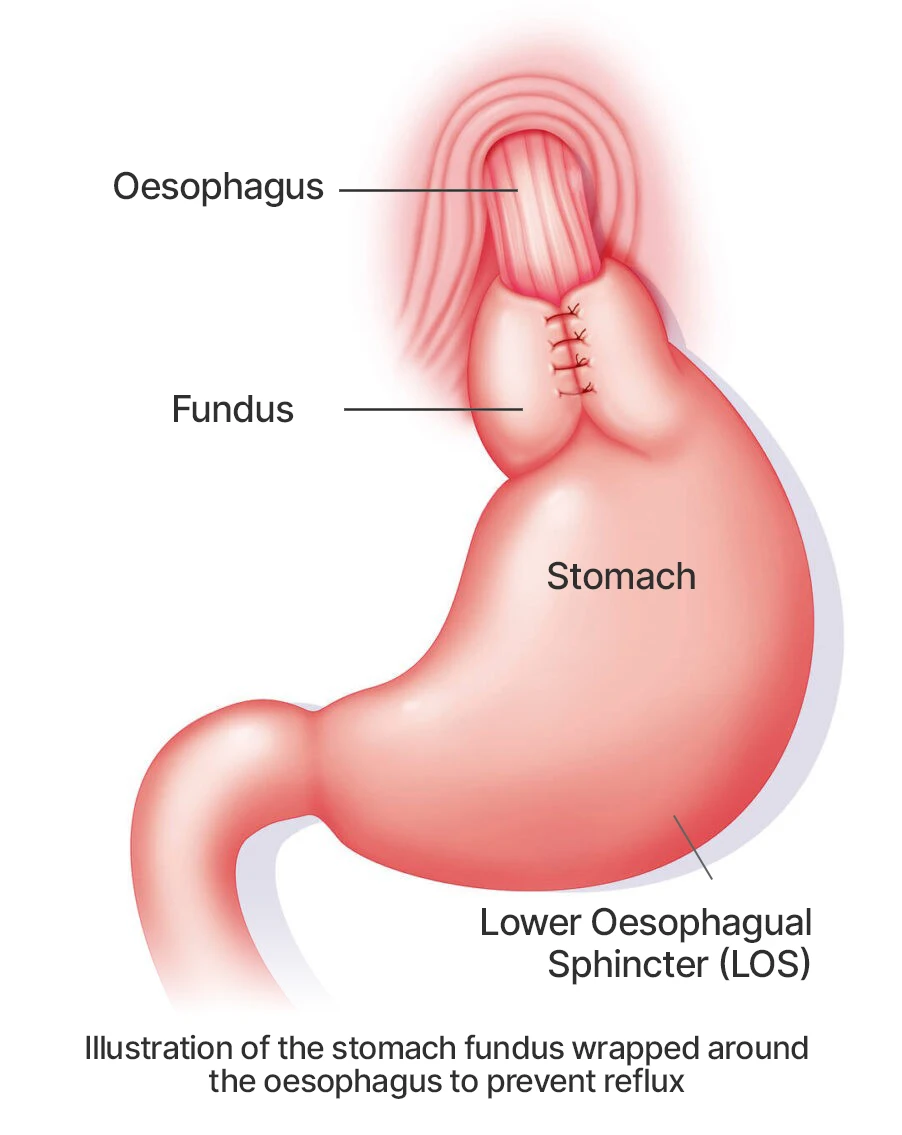
Fundoplication is a keyhole (minimally invasive) operation that strengthens the valve between your food pipe (oesophagus) and stomach. This stops acid and bile from flowing back up, which is what causes reflux symptoms.
In the surgery, the top of the stomach (called the fundus) is gently wrapped around the lower end of the oesophagus. This makes the valve stronger and keeps it closed when it should be, helping reduce or even stop reflux.
Common signs you may benefit from fundoplication
- Ongoing acid reflux or heartburn despite medication
- Regurgitation of food or acid
- Difficulty sleeping due to reflux
- Chronic cough, hoarseness, or sore throat from reflux
- Dependence on antacids or PPI medications
- Diagnosed hiatal hernia that contributes to reflux
Types of fundoplication surgery
There are different techniques depending on your anatomy and symptoms:
- Nissen Fundoplication (360° wrap): Commonly performed, providing a complete wrap.
- Toupet Fundoplication (posterior partial wrap): A partial wrap that may be recommended in patients with weaker oesophageal muscles.
- Dor Fundoplication (anterior partial wrap): Another type of partial wrap.
Your surgeon will talk you through the most suitable option based on your tests, symptoms, and history.
Benefits of fundoplication surgery
If you’re experiencing swallowing problems, your doctor may refer you for tests such as:
- Long-term relief from acid reflux and heartburn
- Reduced reliance on medications like proton pump inhibitors
- Minimally invasive (keyhole surgery) with faster recovery
- Improved quality of life, sleep, and comfort after meals
- Can be performed alongside hiatal hernia repair if needed
Risks and considerations
As with any surgery, there are some potential risks and downsides to consider:
- Temporary difficulty swallowing (usually resolves as swelling settles)
- Gas bloating or flatulence in some patients
- Risk of the wrap loosening or slipping over time
- The need for further surgery over time
Most people recover well with minimal complications, but we’ll always make sure you fully understand the benefits and risks before proceeding.
Your surgical journey
At Auckland Laparoscopic Surgery, you’ll be cared for by a compassionate, expert team with extensive experience in reflux and upper gastrointestinal surgery. We use the latest techniques to ensure the best possible outcomes, with a focus on your comfort and recovery.
Your journey typically includes:
- Consultation and diagnosis using gastroscopy, pH studies, or manometry if needed.
- Personalised surgical planning tailored to your symptoms and health.
- Laparoscopic fundoplication surgery under general anaesthetic.
- Same-day or overnight hospital stay, depending on your recovery.
- Ongoing support and follow-up as you return to eating normally and living free from reflux.
Frequently asked questions
How long does fundoplication surgery take?
About 1–2 hours under general anaesthetic.
How long will I be off work?
Most people return to light activities within 1–2 weeks and full duties after 3–4 weeks.
Will I still need reflux medication after surgery?
Many patients no longer need daily medication, though some may still use it occasionally.
Does the wrap last forever?
In some cases, yes – for some, the wrap may loosen over many years, and revision surgery can be considered if symptoms return.
Take the first step toward reflux relief
If reflux is affecting your sleep, eating, or daily life, laparoscopic fundoplication may be the solution you’ve been looking for. Our team is here to guide you through the process with expert care and empathy.
Contact Auckland Laparoscopic Surgery today to book your consultation and learn how we can help you reclaim a life free from reflux.
