Roux-en-Y gastric bypass surgery overview
At Auckland Weight Loss Surgery, we understand that choosing weight loss surgery is a big decision. For many people living with a weight issue, the Roux-en-Y gastric bypass offers a powerful and effective tool for long-term weight loss and improved health. Often referred to as the ‘gold standard’ of weight loss procedures, this operation has helped thousands of people around the world reclaim their health and quality of life.
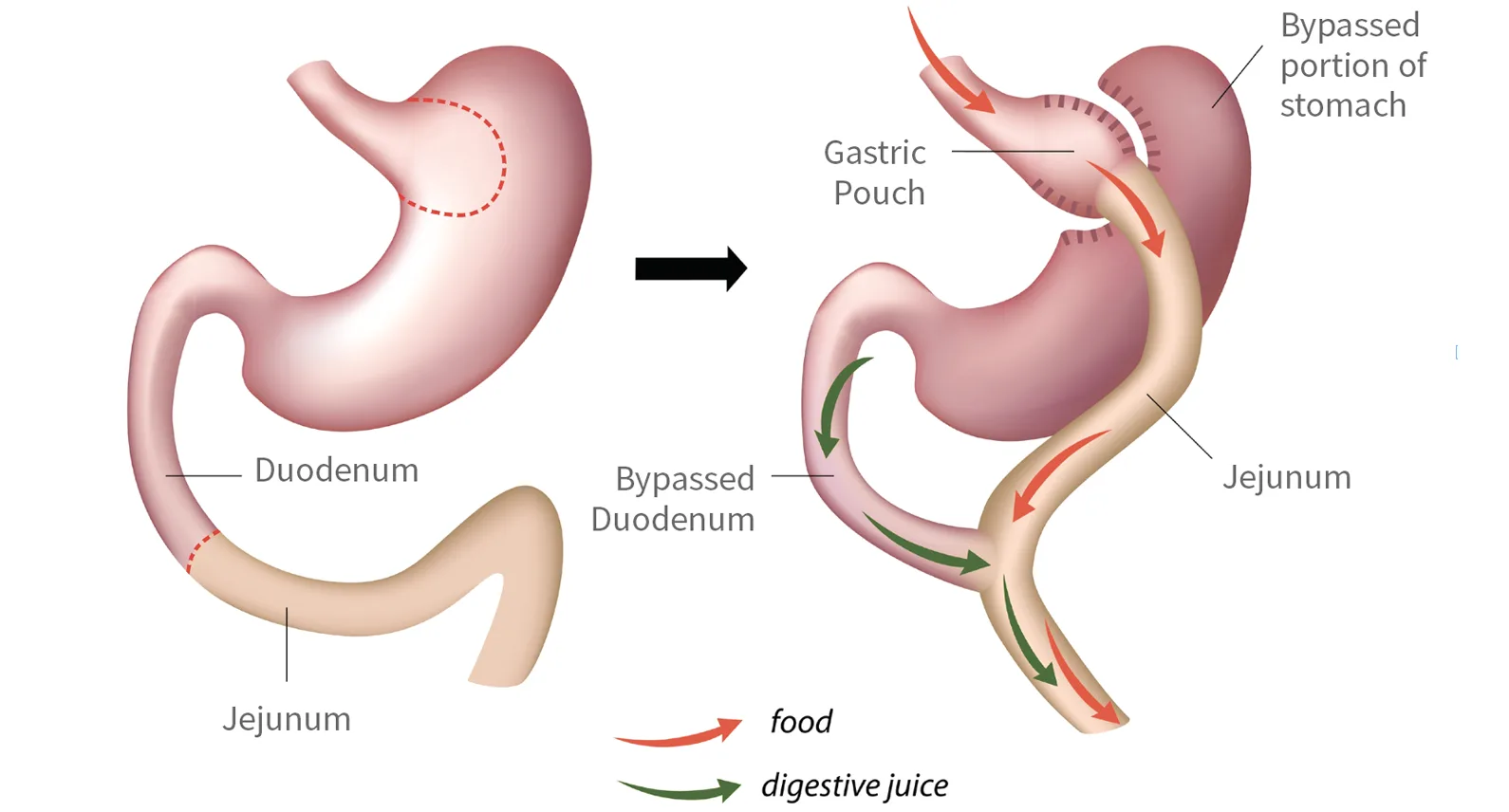
The Roux-en-Y gastric bypass is a well-established surgical procedure that works by creating a small pouch at the top of your stomach and connecting it directly to a lower section of your small intestine. This means food bypasses most of the stomach and the first part of the bowel, helping reduce how much you eat and how much your body absorbs.
As a result, you feel full sooner, and hormonal changes help curb your appetite and improve conditions like type 2 diabetes, high blood pressure, and sleep apnoea. This makes the Roux-en-Y gastric bypass particularly effective for patients with metabolic health concerns.
At Auckland Weight Loss Surgery, your gastric bypass will be performed laparoscopically (using keyhole surgery), which means small incisions, faster healing, and less post-operative discomfort. Your surgeon will carefully introduce a camera and specialised instruments into the abdomen, working with precision and care.
Recovery from gastric bypass surgery is a gradual process, and you’ll be fully supported by the Auckland Weight Loss Surgery team at every step.
In the first days, you’ll start with liquids, then move on to pureed foods. After a few weeks, you’ll transition to three small balanced meals a day. These meals are usually entrée-sized, and more than enough to give you a sense of fullness and satisfaction.
This gentle return to eating helps your new stomach heal and gives you time to learn new habits that support your long-term success.
Improved health
Roux-en-Y gastric bypass surgery reduces the risk of death from obesity. Many obesity-related conditions, such as type II diabetes, obstructive sleep apnoea, joint pain from arthritis, high cholesterol and high blood pressure, are either completely resolved or substantially improved.
Laparoscopic surgery also reduces the risk of wound infections and hernias, and allows you to return home sooner. In the rare event that the procedure cannot be completed this way, your surgeon will safely switch to an open technique, always with your best interests in mind.
Long-term weight loss
Most patients lose around 65–75% of their excess weight (roughly a third of their total body weight) within the first 12 to 18 months. After this period, weight typically stabilises. Some weight regain is possible over time, but it’s usually minor and manageable.
The key to long-term success is using your surgery as a tool, combined with healthy eating, movement, and the right support. At Auckland Weight Loss Surgery, we’re here to guide you through those changes and help you get the most out of your journey
Surgery is just the beginning. A better lifestyle is what follows.
